Exports
Cultural Differences in International Business: How They Shape Exports in 2026
Written by Enes Ünal, Export and Business Development Lead
 Reviewed by Sertaç Öztürkcan, Co-Founder
- Related service Export Consulting
- The basics What is exporting?
Contents3 sections
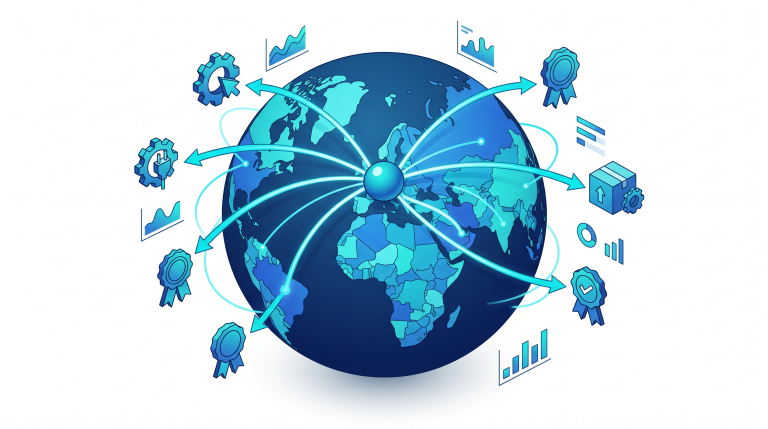
Cultural differences in international business have a direct effect on exports. Meeting style, agenda, attitudes to bargaining and how a product is perceived all change sharply from one country to the next. Exporters who ignore this lose the customer before the door even opens. Technical quality and a competitive price are not enough on their own. Getting the right message through the right channel, in the right cultural context, is what steers export negotiations.

Cultural differences in international business: the barriers Turkish exporters meet most
Türkiye exports to a wide range of markets, from Europe to the Gulf and from Africa to the Far East, and each one brings its own cultural demands. The table below sets out the clearest differences in business culture between the main regions.
| Region | How they prefer to meet | How decisions are made | What to watch |
|---|---|---|---|
| Western Europe (Germany, the Netherlands) | Written / agenda-driven | Fast and data-led | Punctuality and direct communication are critical |
| The Gulf (UAE, Saudi Arabia) | Face to face, relationship first | Trust has to be built over time | The personal relationship comes before the deal |
| South America (Brazil, Colombia) | Face to face, warm contact | Flexible, depends on the relationship | Warmth wins over formality |
| Far East (Japan, South Korea) | Hierarchical, protocol-driven | Slow, needs consensus | Never put anyone in a position where they lose face |
| North America (US, Canada) | Remote / digital-first | Fast, made by individuals | Present a clear, short value proposition |
Examples of cultural differences in business communication and negotiation
In international business, the message you send is often not the message that arrives. You speak from your own cultural frame; the other side reads it through theirs. That gap can sink even a technically excellent offer.
In Germany, for instance, "as soon as possible" in an email sounds vague; people expect a firm date. In the Gulf, the same urgency can feel pushy. In Japan, silence in a meeting means the offer is being considered, not rejected. Negotiate without knowing these nuances and you risk breakdowns that were never intended and are hard to repair.
A practical first step: find out the target market’s public holidays, working hours and preferred channels in advance, so you knock on the door at the right time. The US Department of Commerce’s market intelligence database is one free source of country-by-country notes on business culture.

Adapting your product and marketing to the culture
Cultural adaptation is about more than tone of voice; it also decides how your product is positioned. Consumer habits, how colours and symbols are read, packaging preferences and certification rules in the target country all decide whether your product stays on the shelf.
- Colours and symbols: White is the colour of mourning in East Asia; in the Middle East, the religious associations of green affect positioning.
- Local certificates: Mandatory approvals such as SASO in Saudi Arabia, CE in Europe and FDA in the US are a precondition for market entry.
- How you present price: In some markets the list price is read as your first offer; in others it is simply where negotiation starts.
- Choice of channel: Direct sales are well established in Germany, while in many Asian markets it is extremely hard to get in without a trusted local distributor.
Cultural intelligence builds long-term relationships
What separates a one-off sale from a lasting export relationship is, to a large extent, cultural intelligence. Exporters who absorb the other side’s values, meeting expectations and unwritten rules build trust faster than their competitors and can hold the relationship together in a crisis.
So before entering a market, look beyond price and logistics to the target country’s business culture, negotiating style and decision-making hierarchy. Our Export Consulting service manages this side of exporting as part of one integrated plan.
Cultural adaptation takes serious research and experience. We can plan the whole export journey with you, from market research and buyer matching to communication strategy and negotiations.
Frequently asked questions
-
How can culture affect international business and export success?Directly, and often decisively.
Directly, and often decisively. The wrong communication style, unsuitable marketing material or a missing local certificate can stop even a high-quality product from gaining a foothold in the target market.
-
In which regions does cultural adaptation matter most?The Gulf, the Far East and South America: in these regions, personal relationships and protocol…
The Gulf, the Far East and South America: in these regions, personal relationships and protocol have a direct bearing on the deal. In Western Europe, process and written communication come first.
-
How can you prepare for cultural differences in practice?Start with the basics.
Start with the basics. Learn the target country’s public holidays and working hours, and adapt your tone and channel to the region. Check which local certificates are mandatory and, where possible, work with a local representative or adviser.
-
How does FIX help with this?FIX runs every stage of exporting with data and field experience, from target market analysis…
FIX runs every stage of exporting with data and field experience, from target market analysis and buyer matching to a culturally adapted communication strategy and managing negotiations.
At FIX, based in Ankara, we manage your exports end to end, from choosing the target market to running buyer meetings that respect local culture. Get in touch for details and a free initial assessment.