Exports
CBAM and Türkiye Exporters in 2026: Green Innovation as a Competitive Edge
Written by Aslı Eğilmez, Export & Business Development Consultant
 Reviewed by Sertaç Öztürkcan, Co-Founder
- Related service Export Consulting
- The basics What is exporting?
Contents4 sections
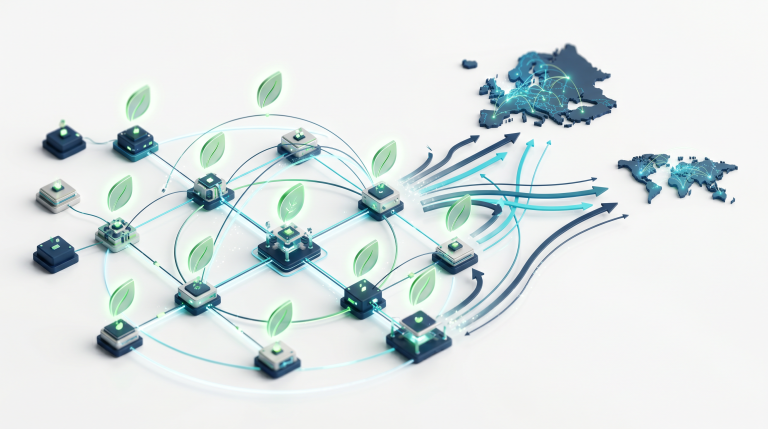
CBAM, the EU’s Carbon Border Adjustment Mechanism, puts a carbon price on imports into the EU. Exporters in Türkiye selling iron and steel, aluminium, cement, fertilisers or electricity to EU buyers feel it directly from 2026. Together with other international rules, it adds cost to, or restricts, EU market access for companies that cannot show cleaner production. If you aim to grow exports from Türkiye, read this shift not as a threat but as a competitive advantage.

What CBAM and the green transition mean for exporters in Türkiye
The European Union, Türkiye’s largest export market, is quickly raising carbon standards on imports under the European Green Deal. Sectors with a heavy concentration of Turkish exporters, such as textiles, steel, chemicals and automotive supply, sit right at the centre of these rules. So what does that mean in practice?
- CBAM (Carbon Border Adjustment Mechanism): carbon reporting is already mandatory on EU imports of iron and steel, cement, fertilisers, aluminium and electricity. From 2026, CBAM enters its definitive phase, in which certificates must be bought to cover the embedded emissions.
- Green supply chain pressure: large European buyers now ask suppliers for Scope 3 emissions data, and those who cannot provide it are left out of tenders.
- Digital Product Passport: under the EU’s Ecodesign for Sustainable Products Regulation (ESPR), a digital sustainability record will become mandatory for many products, starting with textiles and electronics.
Green transformation is no longer just a matter of reputation; it is now a matter of market access.
Where green innovation adds value to exports
Green innovation goes well beyond energy efficiency and waste reduction. For exporters, it pays off in four areas:
1. Product design and life cycle
Recyclable materials, design choices that extend product life and less plastic in packaging now directly influence buyers’ contract decisions in Europe, North America and Japan. Built into R&D, this approach makes a product export-ready before it reaches the market.
2. Clean energy in production
Manufacturers that can document their share of renewable energy move up buyers’ preference lists, especially with German and Scandinavian buyers. A textile company that invests in solar power, or a chemical plant running on wind energy, can turn that advantage into export contracts.
3. Certification and documentation
International environmental certifications such as ISO 14001, B Corp, Bluesign and GOTS open doors in buyers’ supplier assessments. Without them, getting to the negotiating table is increasingly hard.
Green innovation areas and their impact on exports, at a glance
| Area | Example | Target market impact |
|---|---|---|
| Product design | Recyclable packaging, modular design | EU, Japan, North America |
| Energy transition | Share of renewable energy in production | Germany, the Nordic countries |
| Certification | ISO 14001, GOTS, Bluesign | All developed markets |
| Supply chain transparency | Carbon footprint reporting, Scope 3 data | EU, UK |
| Zero-carbon logistics | Electric vehicle fleets, carbon offset agreements | EU (CBAM compliance, 2026 onwards) |

How to build a green export strategy
Building the green transition into your export strategy takes time. Done in the right order, though, it cuts operating costs and opens doors in new markets. The backbone of the process looks like this:
- Carbon footprint assessment: you cannot set the right target until you have mapped the emission sources in your current production.
- Target market regulation: the EU, the US and the Gulf each have different sustainability requirements, so you need a compliance map for each target market.
- Product and process development: developing sustainable products with R&D incentives lowers costs, and government support can help fund the work.
- Certification and reporting: preparing the documents buyers ask for in advance prevents delays in tenders.
- Buyer matching: sustainability-focused buyers behave as a market of their own; reaching the right ones takes sector knowledge and data.
Each step calls for the right roadmap and market intelligence. Our Export Consulting service covers the whole journey, from choosing the target market with data to direct contact with buyers.
Frequently asked questions
-
When does CBAM directly affect exporters in Türkiye?CBAM’s transitional period began in 2023, and full application starts in 2026.
CBAM’s transitional period began in 2023, and full application starts in 2026. Turkish companies exporting iron and steel, aluminium, cement, fertilisers or electricity to the EU will face carbon declaration and certificate purchase obligations. Those that prepare early gain a cost advantage and build credibility with buyers.
-
How can SMEs finance their green transition?TÜBİTAK R&D grants, KOSGEB green transformation support and TTGV environmental project financing…
TÜBİTAK R&D grants, KOSGEB green transformation support and TTGV environmental project financing are the main sources. TÜBİTAK is the Scientific and Technological Research Council of Türkiye, KOSGEB the Small and Medium Enterprises Development Organisation and TTGV the Technology Development Foundation of Türkiye. Exporters’ associations also run support programmes for certification costs. Choosing the right source takes a sector- and project-level assessment.
-
Is the EU closed to exporters without a sustainability certificate?No, not entirely: for now, requirements are not mandatory in every sector.
No, not entirely: for now, requirements are not mandatory in every sector. But under ESPR they are expanding fast in many categories, led by textiles, electronics and packaging. More importantly, large European buyers already treat environmental certificates as a de facto supplier criterion. Preparing before the legal requirement arrives is what keeps the market opportunity open.
-
How long does a green export strategy take?It depends on the company’s current position, target market and sector.
It depends on the company’s current position, target market and sector. From the carbon footprint assessment to first buyer contact, the process takes 3 to 6 months on average. Certification can take longer, so planning should start early.
At FIX, we manage the process end to end, from building your green export strategy and analysing target markets to buyer matching and CBAM compliance preparation. Talk to our team about building a sustainable export architecture.
By Aslı Eğilmez, Export & Business Development Consultant, FIX