Potential customers
How to Find Buyers for Export: A 5-Step Data-Driven Method
Written by Enes Ünal, Export and Business Development Lead
 Reviewed by Sertaç Öztürkcan, Co-Founder
- Related service Finding Overseas Buyers service
- The basics Finding Overseas Buyers
Contents6 sections
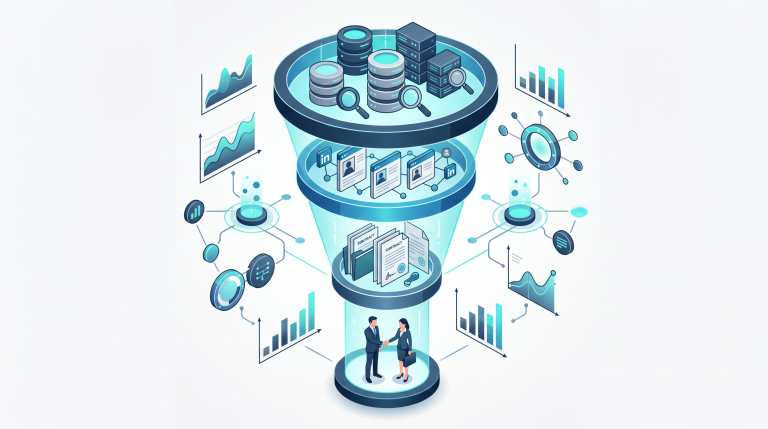
Knowing how to find buyers for export is the defining B2B test for Turkish manufacturers that have strong production capacity but struggle to reach the right markets. Data-led trade intelligence is replacing trade fair trips and random email campaigns. A company with the right method leaves nothing to chance: it reads bill of lading records to see who its competitors sell to, and knows the buyer before it sits down at the table.

Why automotive suppliers need a different strategy
Bursa, with the NOSAB, DOSAB and Nilüfer organised industrial zones, is one of Europe’s most important automotive supply hubs. For a manufacturer of gaskets, pistons, injectors or precision castings, the target market is not only Germany’s big plants: emerging automotive bases in Mexico, Poland, Morocco and Vietnam belong on the radar too.
The first question for any manufacturer in Türkiye looking for overseas customers: does your product serve the OEM channel or the aftermarket (spare parts) chain? The answer decides which database you use and how you pitch.
- OEM channel: You must register on the supplier portals of giants such as Volkswagen and Stellantis. The process is long, but the chance of long-term contracts is high.
- Aftermarket channel: Target regional distributors and trading companies first; bill of lading data gets results much faster here.
- Dual strategy: If capacity allows, running both channels in parallel spreads your revenue risk.
How to find buyers for export: the databases and tools that work
Macro analysis: finding markets with TradeMap
TradeMap shows, by HS code, how much each country imports, at what unit prices and how fast demand is growing. It is the compass for macro analysis before you enter a new market. The free tier is limited, but it is enough to set your direction.
Micro analysis: finding real buyers in bill of lading databases
Platforms such as Panjiva, ImportGenius and Cojunga let you analyse shipment records company by company. They answer questions like "Which US company did my competitor ship to last quarter?" and "How many containers?" Because bill of lading data proves a company already imports, it sharply reduces cold contacts.
Company profiles and risk analysis: Kompass and Dun & Bradstreet
Kompass and D&B make it easier to find purchasing contacts and check a company’s financial risk profile. Seeing the payment habits and credit rating of the company you are quoting before you send the offer avoids needless commercial risk.

LinkedIn Sales Navigator: reaching the decision-maker directly
Take the company names from your databases into LinkedIn Sales Navigator and you can target "Purchasing Manager" or "Supply Chain Director" titles directly. For makers of technical parts, the platform often brings a faster response than a trade fair.
An English-language profile, with your certifications and project photos on show, is what builds trust at first contact. The person you approach will look you up, so your profile is your digital shop window.
Trade fairs or trade intelligence? A comparison
| Feature | Traditional method (trade fair / visit) | Digital trade intelligence |
|---|---|---|
| Cost | High (travel, stand, freight) | Low (software licences) |
| Reach | Limited (only visitors who come to your stand) | Broad (the whole world market) |
| Targeting | Random | Data-led, pinpoint targeting |
| Speed | Slow replies | Instant contact possible |
| Sustainability | Seasonal | Active 24/7 |
| Buyer verification | Face-to-face impression | Bill of lading data + financial risk report |
Cutting consulting costs with government support
Under the Ministry of Trade’s Global Supply Chain Support, trade intelligence reports and database subscriptions you buy can be supported, subject to conditions. Market research reports can likewise be assessed under Market Entry Certificate Support (Pazara Giriş Belgesi Desteği). To benefit, you need to handle the application and the prerequisites correctly.
FIX’s Export Consulting service runs the whole process end to end: data analysis, direct contact with buyers, quotations and closing. Our aim is not a one-off sale, but an export system your company can scale.
Frequently asked questions
-
What is the best database for finding export buyers?There is no single best.
There is no single best. Use TradeMap for macro market analysis, Panjiva or ImportGenius to identify real buyers, and Kompass or Dun & Bradstreet for company and risk profiles. A professional export team combines all three.
-
Does bill of lading analysis work in every sector?It works best in high-volume sectors such as automotive supply, textiles, chemicals and plastics.
It works best in high-volume sectors such as automotive supply, textiles, chemicals and plastics. For service exports, or companies still shipping small lots, macro analysis and LinkedIn come first.
-
Who should use LinkedIn Sales Navigator?It suits companies selling technical products in B2B segments where the buyer is a purchasing…
It suits companies selling technical products in B2B segments where the buyer is a purchasing manager or supply chain manager. It is especially strong for first contact in European and North American markets.
-
How can a manufacturer in Türkiye join a global supply chain?Start by confirming your HS code and certification status, then register on the supplier portals…
Start by confirming your HS code and certification status, then register on the supplier portals of your target OEMs. In parallel, use bill of lading analysis to find aftermarket distributors, so you run a two-channel strategy.
At FIX, based in Ankara, we run every step for you, from data analysis and buyer contact to support applications and operational follow-up. We are here to connect your production capacity to global supply chains.